Shifting the balance between drones and their defences
Matthew Powell looks at the rapid evolution of anti-drone technologies and their effect on future air power.
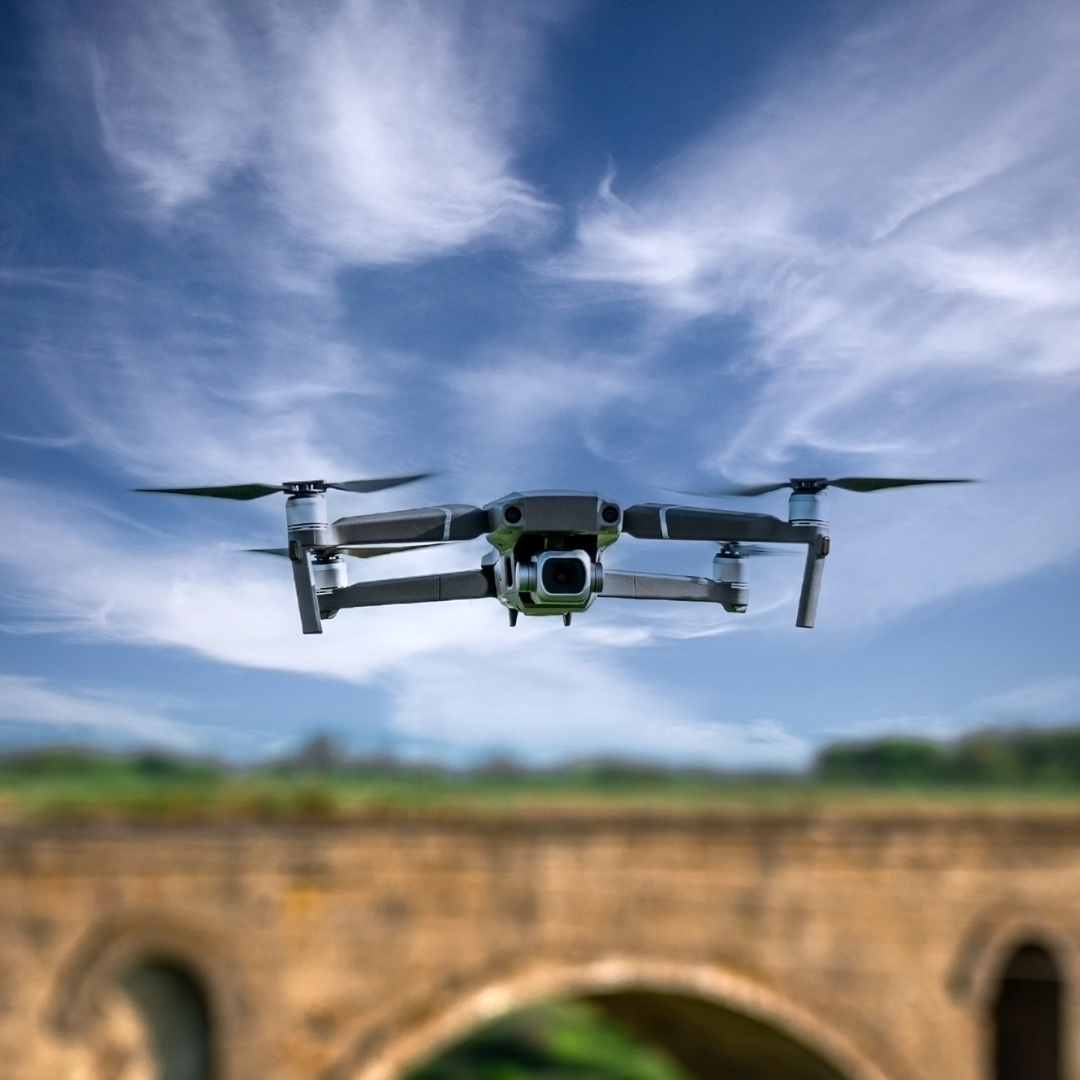
Image by Freepik
The Russo-Ukrainian War has seen the utilisation of drones in many guises in an attempt to support forces on the ground and provide advantage at all three levels of war.
Whilst there have been examples of the increased use of uncrewed and remotely piloted air systems in other recent conflicts, such as between Armenia and Azerbaijan in 2023, the use of these relatively new air systems has increased.
There are two major factors that explain the rise of non-traditional air systems in Ukraine. The first is due to the fact that neither Russia nor Ukraine has been able to establish a degree of control of the air over the battlespace. This makes traditional air assets such as fighter jets more vulnerable, particularly to mobile ground-based air defence such as MANPADS. The second is that the frontlines in this conflict have remained relatively static. This has meant that the shorter range of uncrewed and remotely piloted air systems have been able to sustain their presence in theatre without having to cross vast distances in order to maintain contact with advancing or retreating troops.
The two major roles that these air systems have been seen conducting are intelligence, surveillance and reconnaissance (ISR) and attack. In the ISR role drones have been utilised to provide information both to commanders on the front line and senior leaders to make either tactical adjustments or gain further insights into the intentions of the enemy.
They have further expanded on this role by providing artillery batteries far behind the frontlines with a direct view of potential targets and observation of the fall of shot of shells. This allows the aim of the guns to be corrected quickly and more efficiently, allowing the targets to be engaged and destroyed whilst saving precious ammunition. In the attack role, drones have been seen to have been used to target troops on the ground and strike targets away from the frontlines, including the Russian use of the Shaheed 136 loitering munition. These strikes have included the targeting of civilians and infrastructure of critical importance to Ukraine and its population.
Whilst it appears that the rise of the drone in aerial warfare is unstoppable, the history of warfare demonstrates that the advantages that are enjoyed by new technological developments are often short-lived. The development of the tank on the Western Front in the First World War, for example, was soon met by the introduction of the anti-tank gun.
Similar developments are occurring in Ukraine. One challenge in attempting to reduce the effectiveness of drones is that their relatively small size means that they are difficult to target either in the air or from the ground.
One response to the use of drones has been the use of nets above frontlines. Whilst this is technologically unsophisticated and relatively cheap to deploy, it has had some degree of effect. The use of netting has meant that drones utilised in the attack role are no longer able to engage their targets on the ground with the degree of effect that had been possible previously. This has been a development that has occurred due to the necessity of warfare, but other, more sophisticated technologies are being developed in order to reduce the effect of drones.
Recently, the Royal Navy announced the successful trials and subsequent adoption of a new direct energy weapon called DragonFire. This is a laser-based defensive weapon system designed to be able to engage drones from a distance of up to one kilometre. The accuracy of DragonFire has been claimed to be the equivalent of being able to successfully target a one-pound coin up to a kilometre away. This would allow the system to successfully destroy drones that were within range and prevent them from conducting successful attacks.
There are, however, drawbacks to this new weapons system. DragonFire is a line-of-sight weapon, which means that it has to be able to see the target in order to engage it. There is also the possibility that it may become overwhelmed by swarms of drones, as it can only engage one target at a time.
Another weapons system, this time under development with the British Army, attempts to solve the problem of drone swarms by utilising concentrated radio waves to engage multiple targets simultaneously. By sending a concentrated pulse of radio waves, the drone targets will be destroyed through their electronic components being disabled.
Whilst this new technology, which it must be borne in mind has yet to be deployed, overcomes the problem of mass drone attacks, it appears that there is no possibility at the moment of directing this energy pulse. This means that all electronic equipment in the vicinity of the weapons system will be targeted and so assets such as friendly fixed-wing aircraft will need to be grounded before utilisation.
The use of drones in contemporary and future warfare is here to stay, and they will add a degree of flexibility to the utilisation of air power. Their ability to provide sustained reconnaissance makes them enviable in both military and crisis response contexts. As the history of warfare demonstrates, however, the advantages that drones provide in the early twenty-first century are likely to be short-lived, and countermeasures will make their use more challenging in the future.
Dr Matthew Powell is a Teaching Fellow in Air Power and Strategic Studies at the University of Portsmouth, UK, based at Royal Air Force College, Cranwell. He is an expert in historic and contemporary aerial warfare and has published widely in these areas.