A smart way of moving flexible robots
We often imagine robots as machines with rigid arms, rotating joints and targeted mechanical movements. The famous Optimus Prime and Bumblebee from the Transformers movies appear to fit these criteria.
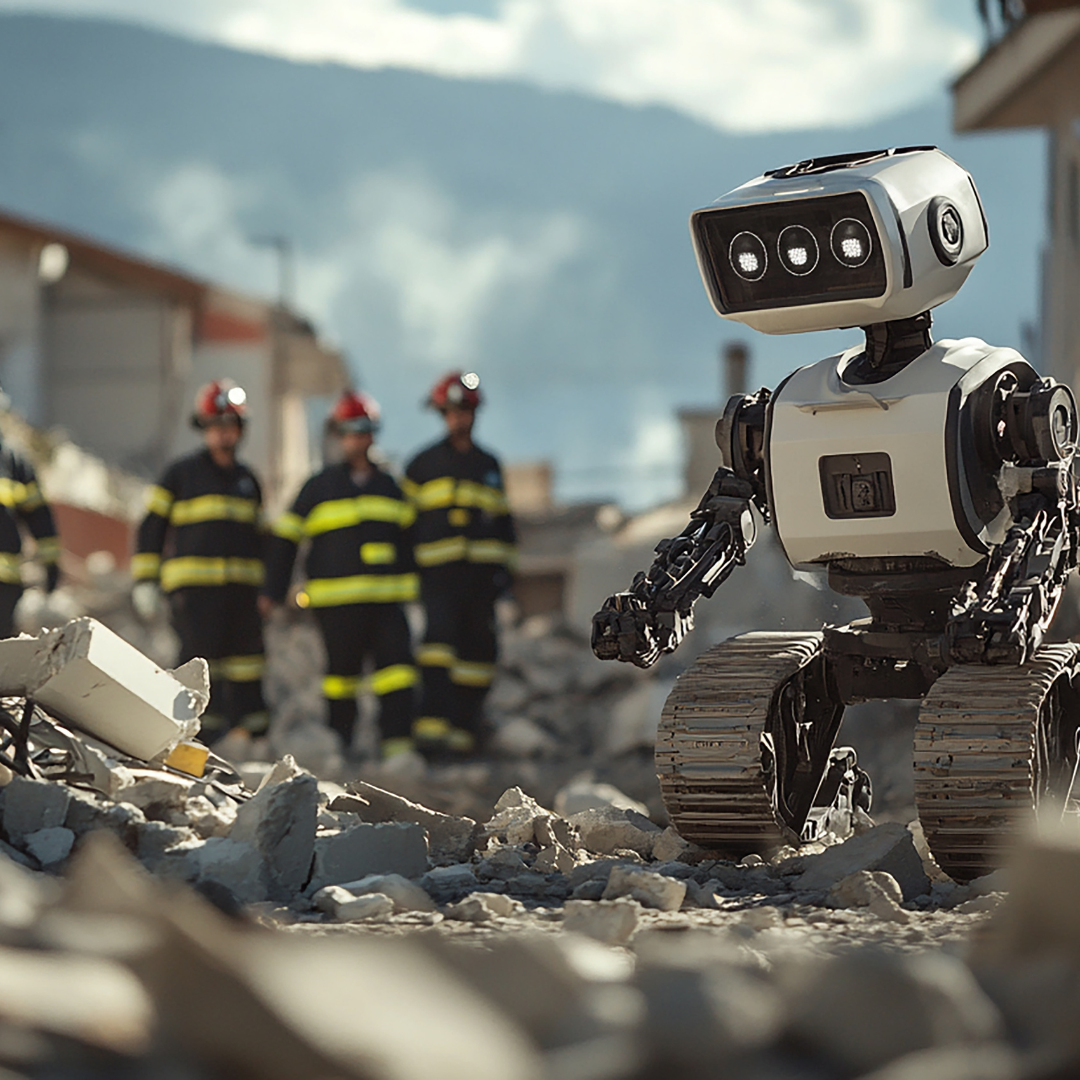
Image by mr_sandun | Freepik
However, such robots would be unable to function in several environments that are too confined and cramped. Imagine this as trying to perform a surgery inside the human body: it would be challenging because of the presence of delicate organs and soft tissue, and there would be so many nooks and crannies. Understandably, a stiff robot would not be able to navigate such places without causing damage, as it would require larger openings to move around.
This issue led to the development of continuum robots (CRs). They have flexible bodies to effectively navigate cluttered environments, particularly in the field of search and rescue. The tendon-driven continuum robot (TDCR) is a type of CR known for its compact, lightweight design and precise control. These marvels have thin wires, called tendons, that aid them to smoothly and accurately bending in different directions. It seems to resonate with a snake’s body, an elephant trunk, and an octopus’ tentacle that can easily move through creeks and crevices, doesn’t it? The tendons are attached along a flexible backbone, and when pulled, appear to mimic animal appendages to create the required motion.
Despite these advantages, predictions involving TDCRs are complex and challenging. Why? Due to the presence of infinite degrees of freedom. Simply put, it is the number of different ways in which something can move. “The situation is further complicated by multiple sections of the robot. Increasing the number of sections would increase the number of tendons, with these tendons influencing the movement of one another. These aspects give rise to a tedious and stubborn puzzle of choosing the right tendon to achieve a desired position or shape of a TDCR,” explained Dr Madhu Vadali, an Associate Professor in the Department of Mechanical Engineering who co-heads the IITGN Robotics Lab, India.
As an effort to address such issues, researchers from the Indian Institute of Technology Gandhinagar (IITGN), India, have introduced the concept of virtual actuation space (VAS). Their study was recently published in Robotica.
As the name suggests, VAS imagines a simple representation of the robot’s motion instead of directly controlling its physical tendons. Bypassing the need for complex calculations, it represents a section’s bending using just two parameters: its direction and magnitude. Compensating for cross-section interactions in TDCRs, VAS enables an independent control of individual sections. This feature is an upgrade compared to traditional control systems, in which moving one section may affect another due to tendon-interconnectedness. It significantly reduces computational demands, improves tracking precision, and reduces the complexity of controlling multi-section robots.
According to Md Modassir Firdaus, first author of the study: “To estimate this method’s effectiveness, we developed a robotic arm with two sections. Further, we had six motors to control tendon lengths for accurate TDCR bending.” A high-resolution motion capture camera was used to accurately assess the robot’s movements. “Small LED markers allowed the camera to track the robot’s position. Later, a computer compared the actual position with the robot’s desired position and adjusted the motors accordingly,” added Dr Shail Jadav, the co-author of the study.
The goal of one of the experiments was for the TDCR tip to sequentially reach each of the five points that formed a pentagon. In another experiment, the robotic arm had to follow trajectories in the shape of a two-petalled flower, spiral, circle, and curve. The error margin for movement in the aforementioned tasks was less than one per cent, highlighting the robot’s remarkable precision. Another interesting finding was that the two sections of the robot could operate independently. In simple terms, one section bent and the other remained straight based on the demand of the situation. To understand it better, imagine moving one’s fingers while keeping one’s wrist straight and then doing the opposite.
In essence, the VAS framework reduces the control complexity and can significantly improve the accuracy of TDCR, which is crucial for tasks such as specific surgeries, the success of which is highly dependent on the careful movements of the robot. In such cases, one cannot afford one robot section to be influenced by the motion of another section. The scalability of this method extends to TDCRs with additional sections, opening doors to other practical applications, such as industrial automation and confined-space inspections.
DOI: 10.1017/S026357472610318X